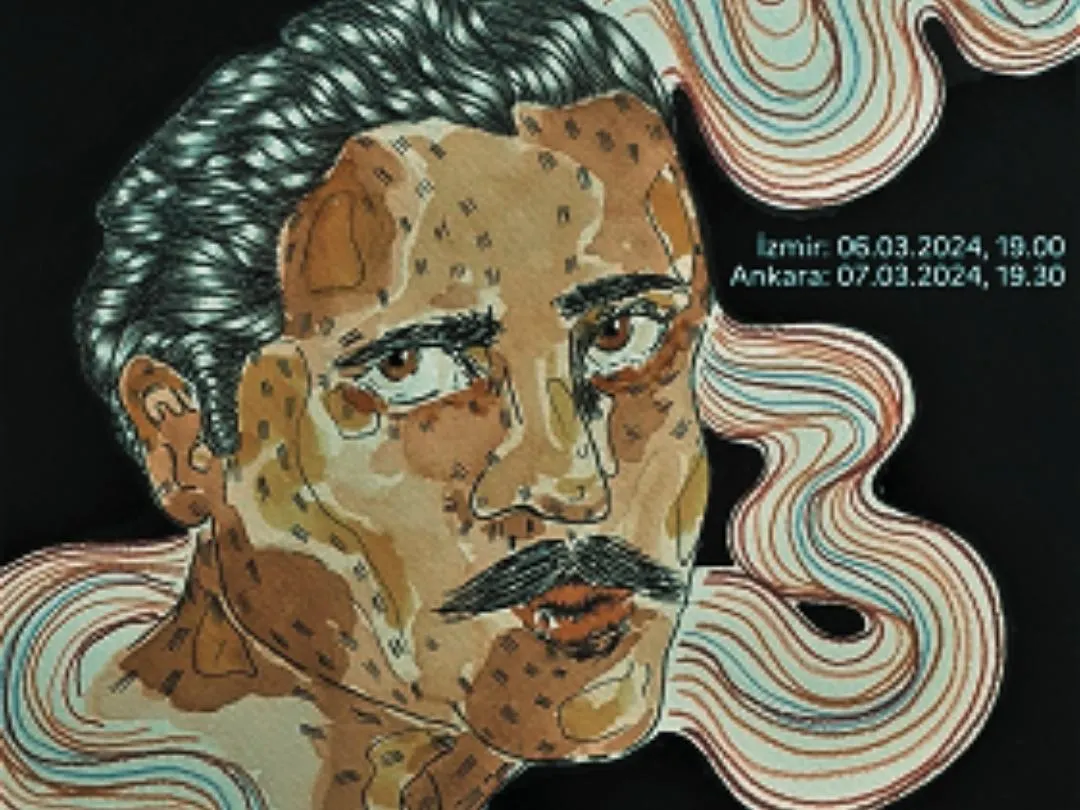
As part of the Printemps des Poètes and Printemps de la Francophonie 2024, Institut Français İzmir presents a theatre piece created and performed by Benoît Vitse, based on readings of texts by the poet Nazım Hikmet.
“The project began with an invitation from Institut Français İzmir two years ago. Then, during an evening with Turkish poets whose work we were reading, I discovered the power and relevance of Nazım Hikmet’s poetry. Back in France, I set about finding more of Hikmet’s texts and, with this show, restoring the power of his writing on stage.”
Drawing on a range of Nazım Hikmet’s texts, from the poems he wrote in prison to his political writings and autobiographical memoirs, Benoît Vitse’s readings pay tribute to the Turkish poet and show just how alive and relevant his work remains.
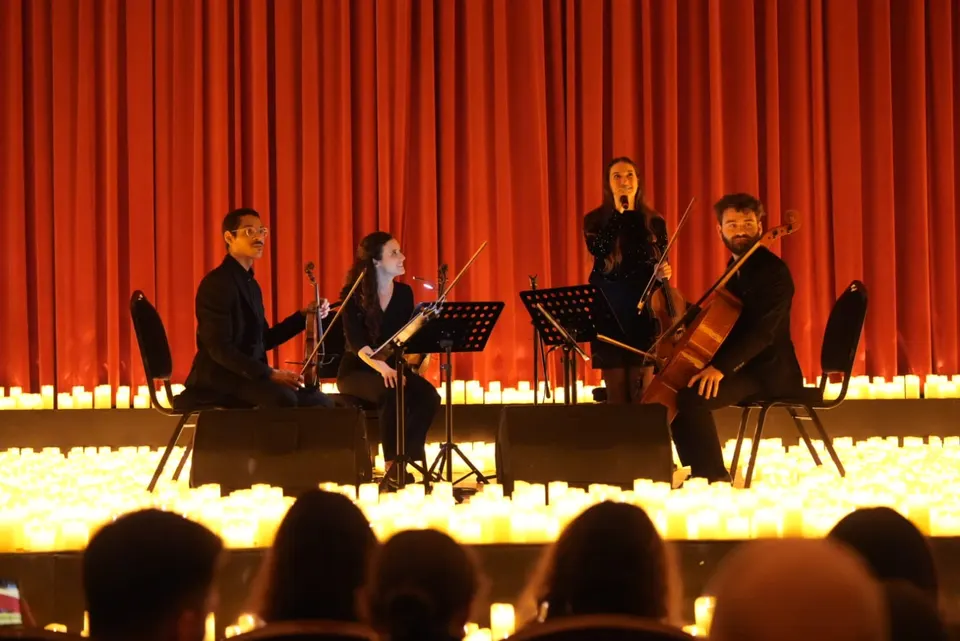
The music accompanying the play is by Turkish musicians, notably Umut Adam Seytanin, and features works for yayla fiddles.
- Institut français İzmir, Wednesday 6 March, 19.00
- Admission free; registration required. To register, CLICK HERE!
- Performed in French only
- Duration: 1 hour
…
Benoît Vitse
Originally an actor, Benoît Vitse went on to serve for fifteen years as director and manager of the Guillaume Cale Company in the Oise. He won awards at the Avignon and Strasbourg Festivals. From 1996 he was director of the French Cultural Centre in Iași, Romania, then director of the Institut français in Kyiv, Ukraine, and in 2002 he became director of the Ateneu European Creation Centre in Romania. He then ran the Cassini Company in Hermes until 2018.
He is the author of several works: Autobiographie autorisée d’un gaucho picard in 2022, and Les Lettres du Moldave and Les Batailles impudiques in 2021.
In 2021 he translated Moi j’ai tué Hitler by the Moldovan writer Dumitru Crudu.
…
Nâzim Hikmet (1902–1963)
As a child, Nâzım Hikmet was enchanted by the poems of his grandfather the Pasha, a high-ranking Ottoman official, and of his mother Djélilé, an artist with a passion for French culture.
Outraged by the Allied occupation of İstanbul after the First World War, fired up by the Turkish peasantry’s struggle for independence and swept up in the excitement of the October Revolution, Nazım was barely twenty when he went to Moscow in 1922.
He returned to Turkey in 1924, after the War of Independence, but, persecuted now that he was a “red”/Communist, he went back to Moscow in 1926, and would come and go many times.
A communist because he loved everything passionately – freedom, his country, his people and women – he became the exiled genius of the Turkish avant-garde.
Back in Turkey, he was sentenced in 1938 to twenty-eight years in prison for having published, in 1936, The Epic of Sheikh Bedreddin (Şeyh Bedrettin Destanı), a eulogy to a rebellion (a peasant’s struggle against the forces of the Ottoman Empire). He was released in 1949 thanks to the efforts of an international support committee formed in Paris by his comrades Jean-Paul Sartre, Pablo Picasso and Paul Robeson.
Hikmet is under constant surveillance. He miraculously survived two assassination attempts but failed to win exemption from the military service he was called up for at the age of fifty. This is the Cold War, and he campaigns against the spread of nuclear weapons.
A very active member of the World Peace Council, the poet sings the Internationale, yet does not keep quiet about his rejection of Stalinism. Having lost his Turkish citizenship, Nazım becomes a Polish citizen and travels everywhere to escape his exile – though only in Europe, Africa and South America, since the United States refuses him a visa.
…
I have ridden in trains, planes and cars,
most people can’t.
I have been to the opera,
most people can’t go, have never even heard of opera
since ’21 I have not gone to some of the places most people go
mosque church temple synagogue sorcerer,
but I have had my coffee grounds read…
(Excerpts from Nazım Hikmet’s Autobiography)