Türkiye İş Bankası Kültür Yayınları welcomes spring with new books in the Hasan Âli Yücel Classics Series and the Modern Classics Series, the 21st Century Library, and the Guide, Research and Children’s categories.
Hasan Âli Yücel Classics Series
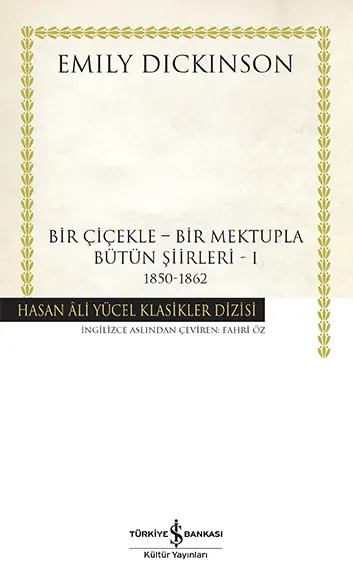
BİR ÇİÇEKLE – BİR MEKTUPLA – BÜTÜN ŞİİRLERİ-I (1850-1862)
Emily Dickinson
Translated from the English by Fahri Öz
The complete poems of Emily Dickinson, one of the foremost poets of 19th-century American literature, will reach readers in three volumes in the Hasan Âli Yücel Classics Series. The first volume, containing the poems Dickinson wrote between 1850 and 1862, is titled Bir Çiçekle – Bir Mektupla (With a Flower – With a Letter).
A lyric artist of matchless stylistic brilliance, Emily Dickinson wrote nearly 1,800 poems in her lifetime, yet only 10 of them were published while she was alive. Freely disregarding the accepted rules of poetry and grammar, Dickinson was also remarkably bold and original in the content of her work. From her twenties onwards the poet began to lead a reclusive life. Many of her poems reveal an effort to reject, or to reflect upon, the loneliness born of a dread of abandonment.
After her death her poems were published many times in various collections, and her complete poems first appeared in 1955. An edition containing all her poems in their original form was prepared by R. W. Franklin in 1999, and this edition was used for the translation published in the Hasan Âli Yücel Classics Series.
Modern Classics Series
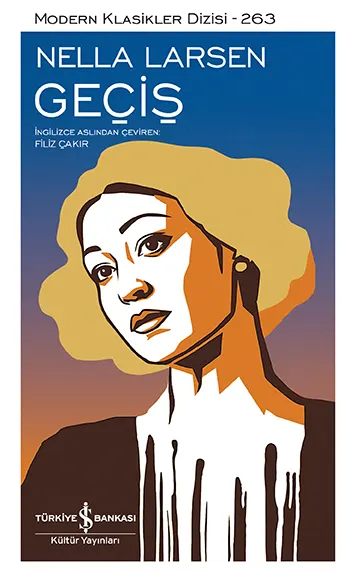
GEÇİŞ
Nella Larsen
Translated from the English by Filiz Çakır
In her novel Geçiş (Passing), Nella Larsen explores the complexity of racial identity in the early 20th-century United States, where a desire for racial purity was imposed. “Passing” refers to people whose skin colour does not reveal their Black ancestry concealing their mixed origins, presenting as white and crossing the “colour line”.
Larsen also satirises the conventions and claims of the Harlem Renaissance, the cultural awakening that emerged in New York’s Harlem in the 1920s and 1930s, in which African Americans powerfully asserted their identity in literature, music, art and thought. Today Passing has become a fixture of academic curricula in African American studies and women’s studies programmes.
Some of the novel’s Black characters “pass” for certain conveniences – to buy a concert ticket, say, or to eat in a restaurant – while otherwise living among Black people and embracing their racial identity. Others live as white among white people, wholly rejecting and concealing their roots. Clare, one of the novel’s central characters, uses her light skin to marry a wealthy white racist, gaining wealth and the privileges of living as a white woman while escaping discrimination, exclusion and racial violence. Yet this opens wounds in her soul that will never heal.
21st Century Library
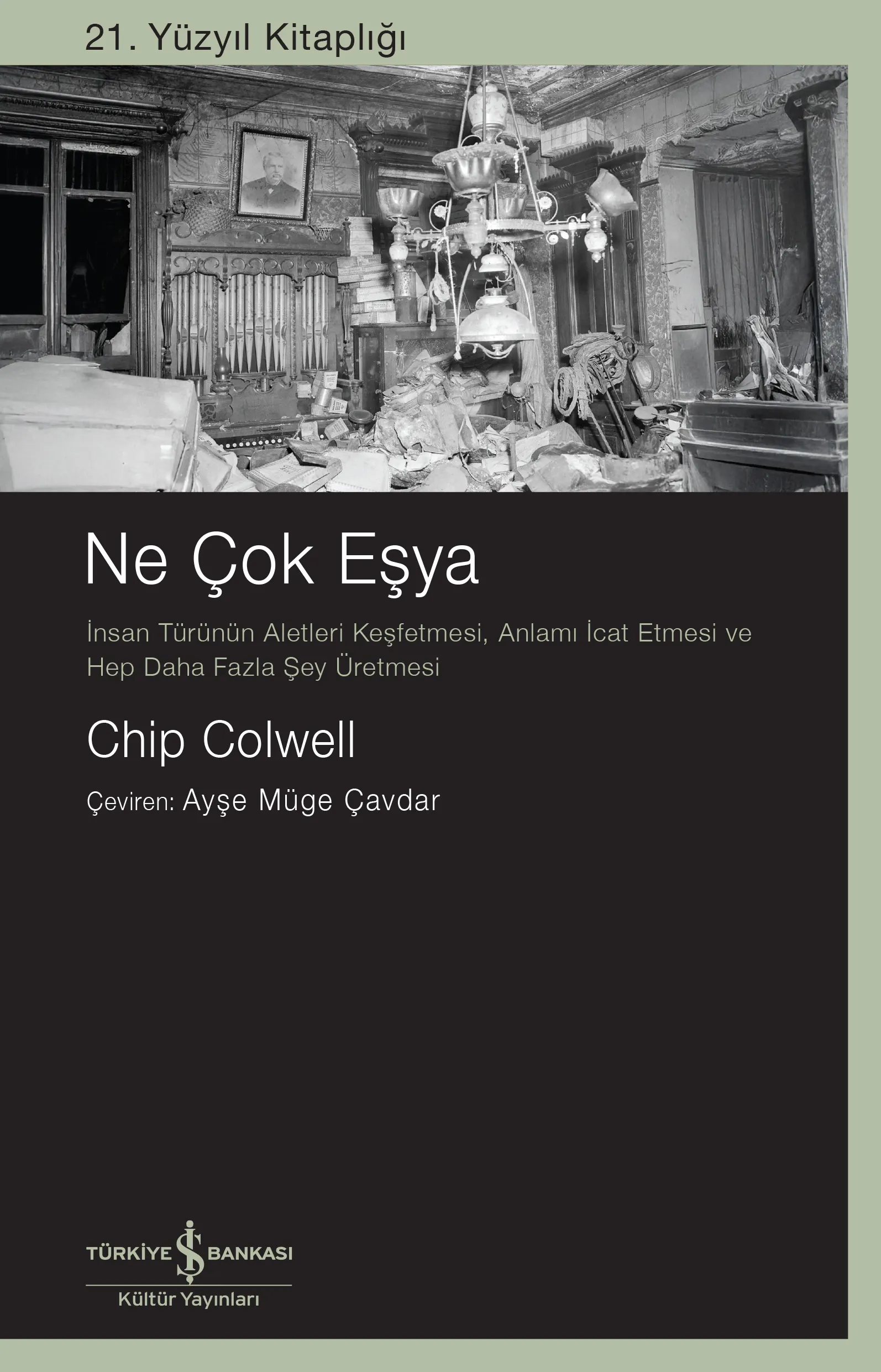
NE ÇOK EŞYA
Chip Colwell
Translated by Ayşe Müge Çavdar
In Ne Çok Eşya (So Much Stuff), archaeologist Chip Colwell delves into the deep history of our species’ relationship with objects. He refuses to confine things to the category of consumption, for objects are also carriers of belonging, ritual, status and security – in short, of meaning. In modern societies, however, this relationship is turning less into an ordinary acceleration than into a proliferation that has spun out of control. Excess is no longer a side effect; it is how the system works. Its cost is becoming visible in heaps of plastic, mountains of rubbish, dwindling resources and an ever-narrowing horizon for the future.
Ranging from stone tools to objects of faith, and from collecting to the subtle persuasions of advertising, Ne Çok Eşya offers no prescription and preaches no minimalism. It reads the ecological and political crises of the 21st century not through grand concepts but through the excess embedded in everyday life, making visible the unbridled rhythm of consumption that lies behind material abundance. For the issue is not so much what we own as where that ownership is taking us. And how we might create meaning without endlessly producing “more” remains one of the most burning questions before us.
Guide Series
BESLENME
David A. Bender
Translated by Çiçek Öztek
In the latest book in the Guide series, Beslenme (Nutrition), academic author David A. Bender examines nutrition from a biochemical perspective to answer the question of why we eat as much as we do. Alongside an understanding of the basic principles of tackling obesity and losing weight, he clarifies the role that physical activity and exercise can play within this framework. Bender stresses the importance of steering clear of extreme diets and of being wary of the bold claims made about food from time to time.
As well as basic needs such as energy nutrition, protein nutrition and getting the necessary vitamins and minerals, the book clarifies the role of functional foods, superfoods and supplements. It also sets out the causes of, and solutions to, the problems of overnutrition and undernutrition.
Research
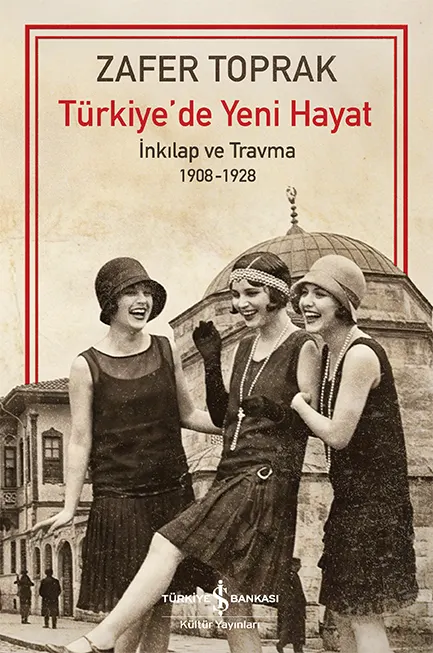
TÜRKİYE’DE YENİ HAYAT – İNKİLAP VE TRAVMA (1908-1928)
Zafer Toprak
Two words that the Constitutional Era either introduced into Turkish or brought into common use were “millî” (national) and “yeni” (new). “Millî” was a pithy expression of the emerging national identity and had a strong political dimension. “Yeni”, meanwhile, expressed the social, and its penetration into the various strata of society took place during the years of the Second Constitutional Era.
1908 was a political revolution; unless it was reinforced by a social revolution it would remain stunted. The “new life” was the expression of this understanding. The backbone of the “new life”, which symbolised a radical transformation in the way of living, was the position of women. The “new life” therefore required the transformation of women – the construction of the “new woman”. As a new nation was being built after the Great War, the idea of the “new life”, on the agenda since the early years of the Constitutional Era, gained strength. This was the main axis along which the Republic parted ways with the Ottoman Empire.
As great empires collapsed, Turkey was the only country in its region to chart its course by its own will: despite losing the Great War, it refused to recognise Sèvres, resisted and founded a new state through the War of Independence. On the other hand, in a country that had lost much of its human resources and a significant share of its adult population over nearly a decade of war, and had been impoverished in every respect, the Republic’s reforming ambitions, its longing for a secular life and the process of leaving Eastern cultural norms behind for Western civilisation would cause ruptures between generations and social dislocation. Turkey would live through its revolutions and social trauma at the same time.
Türkiye’de Yeni Hayat 1908-1928 (New Life in Turkey, 1908–1928) is, in a sense, the story of this social trauma. Drawing on sources from the period, Prof. Dr. Zafer Toprak brings to light the bottlenecks faced by Republican Turkey – above all the population problem – as well as the traumas and impasses of people scarred by war and the difficulty various strata of society had in adapting to the “new life”.
Special Series
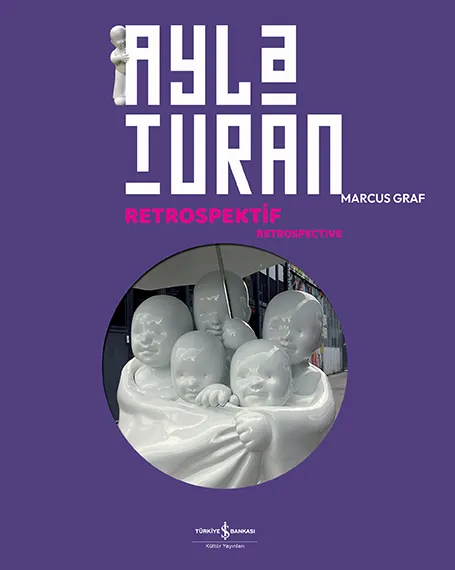
AYLA TURAN – RETROSPEKTİF | RETROSPECTIVE
Text by Marcus Graf
Translated by Neylan Bağcıoğlu
Prepared for the exhibition “Ayla Turan Retrospektif”, on view at İş Sanat Kibele Art Gallery from 9 February to 11 May 2026, the book reflects the milestones of sculptor Ayla Turan’s thirty-year artistic journey. Captioned images of selected works by the artist, held in public spaces and private collections, are accompanied by archive photographs.
Turan says that preparing this retrospective felt “like leafing through old albums”, while in his essay for the exhibition catalogue Prof. Dr. Marcus Graf describes Ayla Turan as an artist “who has built her own path with independence, empathy and quiet determination, and whose practice broadens our horizons as to what sculpture can be and what it can reveal about the world we share”. Of the exhibition he says: “By bringing together thirty years of uninterrupted production, this retrospective makes visible the intimate bonds between Ayla Turan’s life and her art.”
Children’s
DÜNYA HAKKINDA BÜYÜK SORULAR KİTABIM
Written by Moira Butterfield
Illustrated by Cindy Wume
Translated by Zeynep Alpaslan
Every day, every moment, questions pop into our heads about everything from the ground beneath our feet to the starry sky above. Where do the stars go during the day? Do animals talk to each other?
Packed with beautiful illustrations, Dünya Hakkında Büyük Sorular Kitabım (My Book of Big Questions About the World) opens brand-new doors for exploring our wonderful world, with answers to 50 popular questions.
For more information: https://www.iskultur.com.tr/yeni-cikanlar