“If I don’t die of anything else, I will die of the exhaustion of these comings and goings – of coming again and again to the very edge of fading out and reviving, of reviving and reviving only to fade, then starting to fade once more, and this time trying to prevent it.”
In the Dar Zamanlar Üçlemesi (Narrow Times Trilogy), Adalet Ağaoğlu reflects the era stretching from the 1930s to the 1980s through characters drawn from the intellectual class.
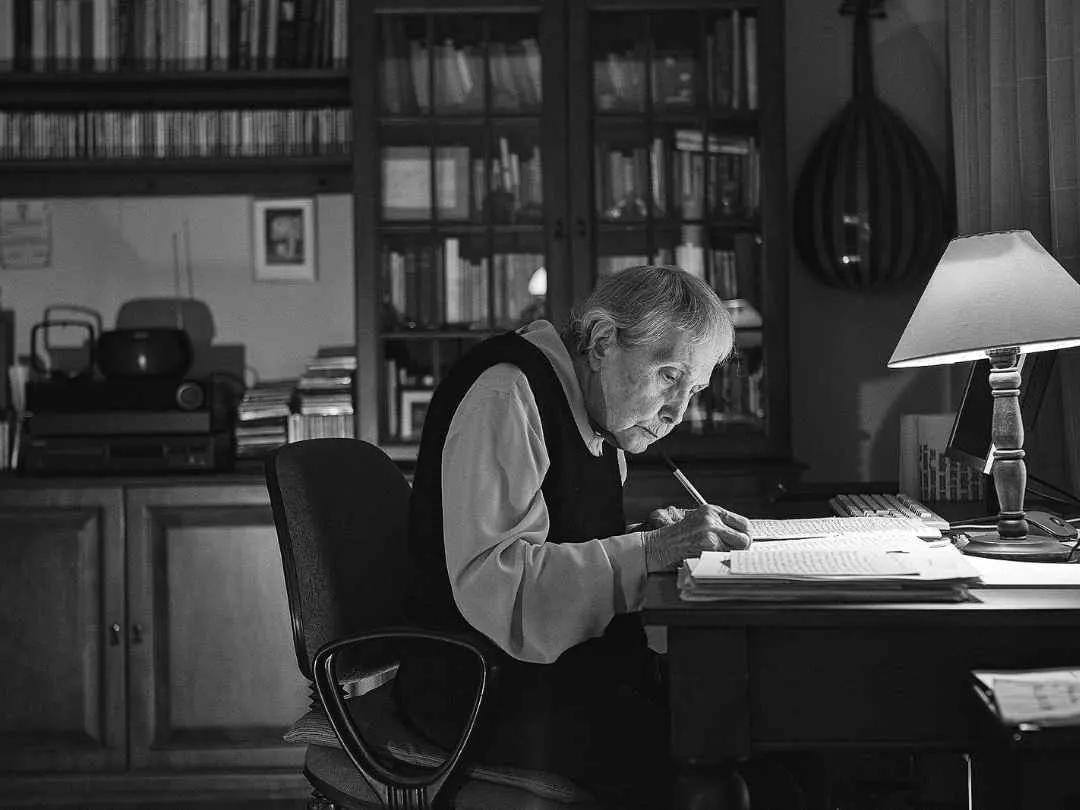
One of the most important writers of 20th-century Turkish literature, Ağaoğlu, though regarded by some critics as a modernist, is among the postmodern writers. Ağaoğlu, who passed away on 14 July 2020, left behind works we will talk about for years to come and never tire of reading as the centuries pass.
“Ölmeye Yatmak” (Lying Down to Die), written by Ağaoğlu in 1973 and the first work of the trilogy, marked the starting point of her career as a novelist and short-story writer. In the Dar Zamanlar trilogy, we witness the story of the main character, Aysel.
The books in the trilogy are Ölmeye Yatmak, Bir Düğün Gecesi (A Wedding Night) and Hayır (No).
The Dar Zamanlar trilogy is a work that reflects its characters’ identity crises and their struggles with the society that shapes them, with their lives, with their experiences and, above all, with themselves. The author explores themes such as rebellion, alienation, forbidden love, political views, loneliness, suicide and feminism.
As the trilogy’s title suggests, all three works take place within a narrow span of time.
Past, present and future exist in a single moment. Perhaps we can interpret the works like this: the author’s aim is to convey the character’s struggle to exist while capturing her state within a narrow time frame, and to keep the reader inside the plot through flashbacks. In these works, the concept of time expands and contracts.
The Dar Zamanlar trilogy carries postmodern influences. The characters’ inner conflicts are very pronounced and their mental worlds highly complex. Ağaoğlu uses stream-of-consciousness and interior monologue techniques to illuminate her characters’ psychological states.
Ölmeye Yatmak (1973)
“Perhaps death has come and is standing at the door. One can only catch such brilliant images at the threshold of death. Like this, one ascribes such novelistic descriptions to oneself in one’s most pitiful moments. Probably out of the same fear again: of being blown away like an insignificant speck of dust.”
First published in 1973, Ölmeye Yatmak covers a time span of 1 hour and 27 minutes. Through flashbacks, we also read thirty years of the life of the main character, Aysel. Thanks to the author’s use of stream of consciousness, interior monologue and flashback, we feel as though we are not so much reading Aysel as watching her. Aysel lies down, stark naked, on a hotel bed. Within this narrow hour and a half, the author makes us witness every moment from the day Aysel started primary school to the moment she lay down to die.
Aysel is an academic who is having an affair with her student Engin. We read about her relationship with Engin, her exchanges with her primary-school friends, and her journey from girlhood to grown womanhood. In this reading we find the characters’ lives, cultural and social change, and their reckoning with themselves.
That Ağaoğlu fits all these emotions into an hour and a half is a great achievement.
Bir Düğün Gecesi (1979)
“The window onto the inner world of intellectuals opened by Oğuz Atay’s Tutunamayanlar takes on the character of an extension of Tanpınar’s Huzur through Adalet Ağaoğlu’s exquisite work Bir Düğün Gecesi.” – Vedat Günyol
Aysel, whom we know from Ölmeye Yatmak, appears this time as a traveller on the way to a wedding. Her sister Tezel and Tezel’s husband Ömer accompany her on the journey. Ağaoğlu makes us witness the events of the novel through Ömer’s eyes. As she relates the notable events at the wedding, its ordinary characters and natural dialogue, we set off on a journey into the characters’ inner worlds.
As in the first book, Ağaoğlu makes us feel a range of emotions within a narrow time frame. While presenting other people’s inner worlds to the reader through Ömer, she does not fail to touch on social issues. In this way, reading Ağaoğlu’s works allows us to see both the socio-cultural features of the period and the different individuals within society side by side.
The novel was written in 1979, only 8 years after the military memorandum. By laying bare post-memorandum Türkiye, Ağaoğlu adds a historical backdrop to the novel’s atmosphere and strengthens the work.
“Look, right now is exactly the time to forget our mistakes, our own and other people’s. Even to love those mistakes. To err is human.”
Hayır (1987)
“Preserving our free identity in every situation depends on these two words, which can only be spoken through action: No to repetition. No to becoming the same. No to sameness. ”
Just as Ağaoğlu offered a panorama of Türkiye in Ölmeye Yatmak and Bir Düğün Gecesi, she follows the same path in Hayır, the last book of the trilogy.
Hayır tells the story of a single day. This time Ömer has left the stage and Aysel appears before us once more. Aysel has grown very old now. She is getting ready for an awards night.
The author takes us right back to the beginning, to Aysel’s primary-school years. Having finished primary school in the early years of the Republic, Aysel is an “idealised child of Atatürk”. As Aysel grows up, so does the pressure on her to be the ideal person. But although she grows up to be a true woman of the Republic and an academic within the intellectual class, she sleeps with her student and begins to be crushed under the weight of the position she has gained in life. Her real aim is to rebel against the identity imposed on her. Aysel does not want to be someone society approves of. Aysel’s concern was to be able to say no. To say no to ordinariness, to being like everyone else, to being unfree, to those who create the mould of the idealised person.
Aysel wanted to exist. Perhaps that is why she told her cries in capital letters.
In Summary
The Dar Zamanlar trilogy consists of Ölmeye Yatmak, Bir Düğün Gecesi and Hayır.
The first book, Ölmeye Yatmak, tells of the emotions an ideal lecturer experiences after sleeping with her student, and of her struggle to exist as she lies alone and naked on a bed in a hotel room.
In the second book, Bir Düğün Gecesi, we see little of Aysel. Ömer takes the stage, and through his eyes we read about the social structure of post-memorandum Türkiye and the identity conflicts of its people.
In the third book, Hayır, Aysel takes the stage once again. She tells us readers that in order to live one must first die, and speaks of the power of being able to say no.
CREDITS
Author: Adalet Ağaoğlu
Genre: Novel
Title: Ölmeye Yatmak
First published: 1973
Title: Bir Düğün Gecesi
First published: 1979
Title: Hayır
First published: 1987